
Stockton Rush Net Worth: OceanGate Founder’s Wealth, Career, Family, and Financial Legacy
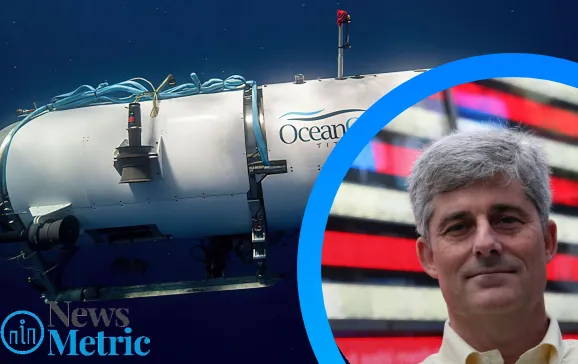
Stockton Rush was an American entrepreneur, aerospace engineer, pilot, investor, and deep-sea explorer who became internationally known as the co-founder and chief executive officer of OceanGate. Although his name had long been recognized within the exploration and marine technology industries, global attention intensified following the June 2023 Titan submersible disaster. Since then, one of the most frequently searched topics about him has been his net worth, family wealth, and the financial story behind OceanGate.
Unlike many technology entrepreneurs who built fortunes through public companies, Stockton Rush’s wealth came from a combination of family resources, business ventures, investments, engineering projects, and OceanGate’s exploration business. Estimating his exact fortune is difficult because OceanGate was privately owned and financial records were not publicly disclosed. However, multiple reports and financial estimates have generally placed his net worth in the multi-million-dollar range, with some reports estimating approximately $12 million to $25 million before his death.
Stockton Rush Profile & Biography Table
| Field | Details |
|---|---|
| Full Name | Richard Stockton Rush III |
| Commonly Known As | Stockton Rush |
| Profession | Entrepreneur, Engineer, Pilot, Deep-Sea Explorer |
| Famous For | Co-founder and CEO of OceanGate |
| Date of Birth | March 31, 1962 |
| Place of Birth | San Francisco, California, United States |
| Nationality | American |
| Zodiac Sign | Aries |
| Date of Death | June 18, 2023 |
| Age at Death | 61 Years |
| Place of Death | North Atlantic Ocean, near the wreck of the Titanic |
| Cause of Death | Implosion of the Titan submersible |
| Education | Phillips Exeter Academy |
| Degree | BSE in Aerospace Engineering |
| University | Princeton University |
| Postgraduate Degree | MBA |
| Business School | University of California, Berkeley (Haas School of Business) |
| First Major Career Role | Flight Test Engineer at McDonnell Douglas |
| Notable Project | F-15 Fighter Aircraft Program |
| Company Founded | OceanGate |
| OceanGate Founded | 2009 |
| Co-Founder | Guillermo Söhnlein |
| Position at OceanGate | Chief Executive Officer (CEO) |
| Industry | Deep-Sea Exploration and Marine Technology |
| Estimated Net Worth | Commonly reported between $12 million and $25 million |
| Marital Status | Married |
| Wife | Wendy Rush (née Wendy Weil) |
| Marriage Year | 1986 |
| Children | 2 |
| Father | Richard Stockton Rush Jr. |
| Mother | Ellen Davies Rush |
| Maternal Grandfather | Ralph K. Davies (Oil Industry Executive) |
| Maternal Grandmother | Louise M. Davies |
| Notable Family Connection | Descendant of Benjamin Rush and Richard Stockton, both signers of the U.S. Declaration of Independence |
| Hobbies | Flying, Aviation, Scuba Diving, Ocean Exploration |
| Pilot Certification | Commercial Pilot |
| Aircraft Owned | Glasair III Experimental Aircraft |
| Ocean Exploration Experience | Multiple Deep-Sea Expeditions |
| Final Expedition | Titan voyage to the Titanic wreck site |
| Legacy | Pioneer of private deep-sea tourism and exploration |
Who Was Stockton Rush?
Richard Stockton Rush III was born on March 31, 1962, in San Francisco, California. He came from a distinguished American family with deep historical roots. His family lineage included influential political and business figures, and he was named after earlier generations of the Rush family. From an early age, he displayed an interest in aviation, engineering, and exploration.
Rush often described himself as someone fascinated by technology and adventure. While many children dreamed of becoming astronauts or pilots, he actively pursued those ambitions. He learned to fly at a young age and eventually became a commercial pilot while still in his teens. According to his own accounts, he earned a jet transport rating at age nineteen, an achievement that helped establish his reputation as a highly motivated young aviator.
His lifelong interest in exploration would later shape every major stage of his professional career.
Family Background and Wealth
One reason public interest in Stockton Rush’s net worth remains high is his family background. Rush was not born into an ordinary household. His family had connections to some of America’s historic business and political circles.
His maternal grandfather was Ralph K. Davies, a successful businessman who built significant wealth through the oil industry. Davies became one of the major figures in American petroleum development during the twentieth century. Through family inheritance and established wealth, Rush grew up with financial advantages that provided educational and entrepreneurial opportunities.
Historical records also connect the Rush family to prominent figures in early American history. These family connections contributed to a legacy of influence, education, and financial stability that extended across generations.
While Stockton Rush built his own career independently, family resources and connections undoubtedly helped create a foundation that allowed him to pursue ambitious ventures that required substantial capital investment.
Education and Early Career
Rush attended Princeton University, where he earned a degree in aerospace engineering. His academic training provided a strong technical background that later influenced his work in aviation and marine technology.
After graduating from Princeton, he joined McDonnell Douglas as a flight test engineer working on the F-15 fighter aircraft program. The position gave him practical experience with advanced engineering systems and complex technological projects.
Although the aerospace industry offered a promising career path, Rush eventually shifted toward entrepreneurship. He later completed an MBA at University of California, Berkeley, strengthening his business knowledge and preparing for future ventures.
His combination of engineering expertise and business education would become a defining characteristic throughout his career.
Entrepreneurial Ventures Before OceanGate
Before founding OceanGate, Rush participated in several technology and investment projects. He became involved with companies focused on innovation, engineering, and underwater technologies.
He served on the board of marine technology businesses and developed a reputation for supporting emerging technological solutions. These activities helped him build both professional experience and personal wealth.
Unlike founders who focus exclusively on financial returns, Rush frequently invested in ventures connected to exploration, transportation, and scientific discovery. This approach reflected his personal interests as much as his business ambitions.
By the late 2000s, he had become increasingly interested in ocean exploration, believing that the deep ocean represented one of the last great frontiers for private innovation.
Founding OceanGate
In 2009, Rush co-founded OceanGate alongside Guillermo Söhnlein. The company aimed to expand access to deep-sea exploration using privately operated submersibles.
Rush believed underwater exploration lagged behind space exploration in terms of investment and public interest. He argued that only a small number of people had visited the deepest parts of the ocean and that technological innovation could dramatically reduce costs.
OceanGate initially focused on research expeditions, underwater surveys, and educational missions. Over time, the company expanded into tourism and commercial exploration.
This business model positioned OceanGate as one of the most recognizable private ocean exploration companies in the world.
OceanGate’s Revenue Model
A significant portion of Stockton Rush’s wealth became tied to OceanGate’s growth.
The company generated revenue through exploration expeditions, scientific research projects, documentary partnerships, and private tourism experiences. One of its most famous offerings involved expeditions to the wreck of the Titanic. Passengers reportedly paid approximately $250,000 per seat to participate in these deep-sea journeys.
Because OceanGate remained privately held, its revenues and profitability were never publicly disclosed. However, the high cost of expeditions suggested substantial earning potential. At the same time, developing and operating advanced submersibles required enormous investments in engineering, testing, logistics, support vessels, and crew operations.
As a result, even if OceanGate generated millions in revenue, operating expenses were also exceptionally high.
Stockton Rush Net Worth Estimates
Determining Stockton Rush’s exact net worth is challenging because no official public financial filings revealed his personal assets.
Various media estimates have placed his fortune between approximately $12 million and $25 million. Some reports published after the Titan disaster estimated his net worth at around £19.5 million, while other analyses suggested wealth in the low-to-mid eight figures.
Several factors contributed to these estimates:
His ownership stake in OceanGate represented the largest component of his wealth. Additional assets likely included investments, aviation interests, real estate holdings, inherited family wealth, and business equity accumulated throughout his career.
However, because OceanGate was a private company, there was never a verified public figure confirming his exact net worth.
The Titan Project and Financial Risk
The Titan submersible became Rush’s most ambitious project.
Designed to reach depths of approximately 4,000 meters, Titan was intended to make repeated voyages to the Titanic wreck site. Rush promoted the vessel as an innovative step forward in deep-sea exploration.
Developing Titan required substantial financial investment. Engineering costs, manufacturing expenses, testing programs, support infrastructure, and expedition logistics demanded millions of dollars over several years.
Rush viewed these investments as necessary to transform underwater exploration into a more accessible industry. He often compared deep-sea exploration to the early years of commercial aviation and private spaceflight.
The financial future of OceanGate became increasingly linked to Titan’s success.
Marriage and Family Life
Stockton Rush married Wendy Rush in 1986.
The couple met while attending Princeton University and remained together for decades. Wendy Rush later became involved with OceanGate and served as the company’s Director of Communications.
Their marriage produced two children. Despite Rush’s public profile in exploration circles, the family generally maintained privacy regarding their personal lives.
Wendy Rush attracted additional media attention after reports revealed she was a descendant of Isidor Straus and Ida Straus, the famous couple who died aboard the Titanic in 1912. This historical connection later became widely discussed because OceanGate’s most famous expeditions focused on the Titanic wreck site.
Aviation, Exploration, and Personal Interests
Outside business, Rush remained passionate about flying and engineering.
He became a pilot at a young age and continued flying throughout his life. He also built and operated his own aircraft, reflecting his hands-on interest in advanced technology.
Another lifelong passion was scuba diving. He reportedly began diving as a child and maintained a deep fascination with underwater exploration. This enthusiasm ultimately evolved into the vision that led him to establish OceanGate.
Rush frequently cited explorers, innovators, and entrepreneurs as inspirations. He believed technological progress required individuals willing to challenge established boundaries and accept significant risks.
The Titan Disaster and Death
On June 18, 2023, Rush piloted Titan during an expedition to the wreck of the Titanic.
The submersible lost contact with its support vessel during descent. After an extensive international search effort, investigators determined that Titan had suffered a catastrophic implosion, killing all five people aboard.
The disaster generated worldwide media coverage and prompted investigations into OceanGate’s engineering practices, safety procedures, and regulatory oversight. Reports later examined warnings that had been raised regarding the vessel’s design and certification.
Rush died alongside renowned Titanic expert Paul-Henri Nargeolet, businessman Shahzada Dawood, his son Suleman Dawood, and explorer Hamish Harding.
Investigations and Legacy
Following the implosion, investigations examined OceanGate’s operational practices and Titan’s engineering design.
Subsequent reports criticized safety procedures and concluded that significant failures contributed to the tragedy. Investigators argued that warning signs and concerns raised by industry experts should have received greater attention.
Supporters of Rush continue to view him as an ambitious innovator who sought to expand human access to the deep ocean. Critics argue that his pursuit of innovation came at the expense of established safety standards. The debate remains central to discussions surrounding his legacy.
Stockton Rush’s Financial Legacy
Stockton Rush left behind a complex financial and professional legacy. His wealth reflected both inherited advantages and decades of entrepreneurial activity. Although he never reached billionaire status, he accumulated considerable personal wealth through business ownership, investments, and OceanGate.
His most valuable asset was his stake in OceanGate, a company that attempted to reshape deep-sea tourism and exploration. At the same time, the Titan disaster fundamentally altered public perception of both the company and its founder.
Today, Stockton Rush remains one of the most discussed figures in modern exploration history. His story combines engineering ambition, entrepreneurship, inherited privilege, technological innovation, financial risk, and one of the most widely reported maritime disasters of the twenty-first century. While estimates of his net worth vary, his impact on the conversation surrounding private ocean exploration continues to be felt long after his death.
- What is David Fishwick Net Worth? Discover His Wealth and Personal Life
- Jack Taylor Net Worth: He Built $12.8 Billion Fortune from Car Rentals
- Andy Murray Net Worth: Biography, Earnings, Career, and Wealth Growth
FAQs
1. What was Stockton Rush’s net worth?
Most reports estimated Stockton Rush’s net worth to be between $12 million and $25 million before his death. His wealth came from family assets, investments, aviation interests, and his ownership stake in OceanGate.
2. Who was Stockton Rush?
Stockton Rush was an American entrepreneur, aerospace engineer, pilot, and deep-sea explorer. He was best known as the co-founder and CEO of OceanGate, a company focused on private ocean exploration and submersible technology.
3. What happened to Stockton Rush?
Stockton Rush died on June 18, 2023, during an expedition to the Titanic wreck site. The Titan submersible suffered a catastrophic implosion in the North Atlantic Ocean, killing all five people aboard.
4. Was Stockton Rush married?
Yes. Stockton Rush was married to Wendy Rush in 1986. They met while attending Princeton University and had two children together. Wendy Rush also worked with OceanGate as the company’s Director of Communications.
5. What was OceanGate?
OceanGate was a privately owned ocean exploration company founded in 2009 by Stockton Rush and Guillermo Söhnlein. The company specialized in deep-sea expeditions, underwater research, and submersible tourism, including voyages to the Titanic wreck site.
6. What was Stockton Rush’s educational background?
Rush studied aerospace engineering at Princeton University and later earned an MBA from the University of California, Berkeley. He also worked as a flight test engineer for McDonnell Douglas early in his career.
News Metric for more informative topics