Nicol Williamson: Inside the Life of the Theatre and Film Legend
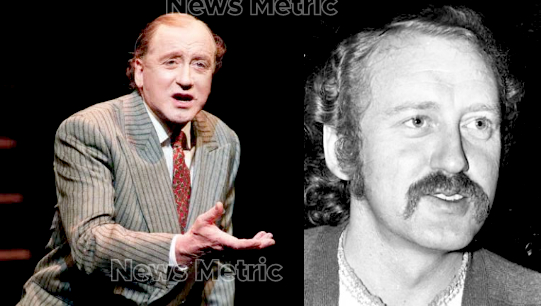
Nicol Williamson was a legendary British actor known for his electrifying stage presence and unforgettable film performances. From his iconic portrayal of Hamlet to the mystical Merlin in Excalibur, Williamson’s career spanned decades of theatrical and cinematic excellence. Celebrated for his emotional intensity, unpredictability, and fearless approach to acting, he left an indelible mark on both theatre and film. In this comprehensive biography, we explore Nicol Williamson’s life, career, net worth, personal relationships, top roles, and legacy, giving fans and newcomers alike an in-depth look at one of the most compelling actors of the 20th century.
Nicol Williamson Profile Bio:
| Attribute | Detail |
|---|---|
| Full Name | Thomas Nicol Williamson |
| Also Known As | Nicol Williamson |
| Date of Birth | 14 September 1936 |
| Place of Birth | Hamilton, Lanarkshire, Scotland, UK |
| Date of Death | 16 December 2011 |
| Age at Death | 75 years |
| Nationality | British |
| Occupation | Actor (Stage, Film, Television) |
| Years Active | 1956–1997 |
| Spouse | Jill Townsend (m. 1971–1977) |
| Children | Luke Williamson |
| Height | ~6′1″ (185 cm) |
| Notable Roles | Hamlet, Merlin in Excalibur, Sherlock Holmes, Badger in The Wind in the Willows |
| Estimated Net Worth | $1–3 million |
Early Life: Roots in Scotland and England
Nicol Williamson was born Thomas Nicol Williamson in Hamilton, Scotland, in 1936, into a modest working-class family. His father, Hugh Williamson, worked in an aluminum factory, while his mother, Mary, managed the household. As a young boy, Nicol experienced the upheaval of wartime Britain. To escape the dangers of bombings in industrial Birmingham, where the family had moved when he was a toddler, Nicol was sent to live with his grandparents in Scotland. This period of displacement left a lasting mark on his personality. He developed a strong sense of independence, resilience, and an early fascination with the human condition—qualities that would later define his acting style.
Upon returning to Birmingham after the war, Nicol attended Central Grammar School for Boys. Academically, he was unremarkable, but his sharp wit and keen observational skills set him apart. Leaving school at sixteen, he briefly worked in his father’s factory but found factory life stifling. The confinement and monotony fueled a yearning for creative expression. From these humble beginnings, Nicol began exploring performance, drawn not by fame but by the raw emotional connection that theatre could evoke.
Discovering Acting: Education and Early Career
Nicol Williamson enrolled at the Birmingham School of Speech and Drama, though he often described his training there with irreverence. He felt the environment was conventional and restrictive, lacking the daring spirit he craved. However, the school offered him foundational skills in voice, movement, and textual analysis, all of which would later be adapted into his own unique, intuitive approach to acting.
After completing his formal training, Nicol briefly served in the military as part of his National Service. He was a gunner in the Airborne Division, an experience that exposed him to discipline, physical rigor, and the psychological challenges of extreme environments. These experiences would inform his understanding of human resilience and vulnerability, themes he explored with intensity in his performances.
Following military service, Nicol joined the Dundee Repertory Theatre, where he spent eighteen months immersed in a rigorous schedule of productions. This period was formative. He performed in classical works, contemporary plays, and experimental theatre, absorbing a breadth of styles while developing his distinctive ability to inhabit psychologically complex characters with authenticity and raw energy.
Breakthrough on Stage: The Rise of a Star
Williamson’s career took a decisive turn in the early 1960s. He made his London stage debut in A Midsummer Night’s Dream at the Royal Court Theatre, displaying a presence that immediately caught the attention of critics and audiences. However, it was his performance in John Osborne’s Inadmissible Evidence in 1964 that established him as a theatrical force. Portraying the emotionally volatile lawyer Bill Maitland, Williamson captured the audience with a performance that was both unnerving and magnetic. The role demanded an extraordinary emotional range, and Williamson’s intensity was undeniable. When the play moved to Broadway, he earned his first Tony Award nomination, solidifying his reputation internationally.
Around the same time, he undertook the role of Vladimir in Samuel Beckett’s Waiting for Godot. Beckett’s work required precise timing, emotional restraint, and a deep understanding of existential subtext. Williamson’s interpretation was widely praised for its depth and idiosyncratic energy. Directors and fellow actors recognized him as a performer unafraid to confront the complexities of the human psyche, and he quickly became known for his fearless dedication to artistic truth.
Film Career: From Shakespeare to Merlin
While theatre remained his first love, Nicol Williamson transitioned seamlessly into film, bringing the same intensity and complexity to the screen. His early film roles in the late 1960s and early 1970s, such as The Bofors Gun and Laughter in the Dark, earned him recognition for his versatility. He could portray vulnerability and menace, charm and rage, often within the same scene. His performance in Laughter in the Dark won him the Silver Shell for Best Actor, a testament to his growing international acclaim.
Williamson’s most iconic screen role was arguably Merlin in John Boorman’s Excalibur (1981). Unlike traditional portrayals of the legendary wizard, Williamson infused Merlin with unpredictability, humor, and a haunting gravitas. The result was a character that felt both ancient and immediately human. Audiences and critics alike praised his performance, cementing his status as a distinctive cinematic presence.
Other notable roles included Sherlock Holmes in The Seven-Per-Cent Solution, Father Morning in The Exorcist III, and the voice of Badger in The Wind in the Willows. Across these diverse roles, Williamson consistently demonstrated an ability to inhabit characters with total authenticity, leaving an indelible mark on both theatre and film.
Personal Life: Passion, Turmoil, and Family
Nicol Williamson’s personal life was as intense and unpredictable as his performances. In 1971, he married American actress Jill Townsend, whom he had met through stage work. Their union produced one son, Luke Williamson, in 1973. While deeply devoted to his family, the marriage was fraught with challenges, and the couple divorced in 1977. Despite their separation, Williamson and Townsend maintained mutual respect, and he remained a committed father to Luke throughout his life.
Known for his fiery temperament, Williamson struggled with alcohol and heavy smoking. Reports from his friends and colleagues suggest he smoked up to eighty cigarettes a day at his peak and was prone to impulsive outbursts. These personal battles, however, often fueled his performances, adding layers of raw authenticity to the characters he portrayed. He was open about his fascination and fear of death, acknowledging the fragility of life and using that awareness to deepen his artistic expression.
Style and Acting Philosophy
Williamson’s acting style was characterized by emotional intensity, unpredictability, and complete immersion. He approached each role as a unique human experience rather than a scripted performance. Unlike many actors who rely heavily on technique, Williamson prioritized truth and spontaneity. He believed that the audience’s connection depended on emotional honesty, not perfection. This philosophy sometimes led to conflict in collaborative settings, as directors and co-stars struggled to anticipate his choices, but it also resulted in performances that were electrifying and unforgettable.
He had a particular talent for Shakespearean and classical theatre, yet he refused to be pigeonholed. Whether portraying Hamlet, Macbeth, or a contemporary character, Williamson’s performances were always visceral, intelligent, and unpredictable. His work demonstrated a deep understanding of human psychology, combined with a willingness to take artistic risks.
Later Career and Creative Pursuits
In the 1980s and 1990s, Williamson’s career became more selective. He turned down many commercial projects in favor of roles that challenged him emotionally and intellectually. He wrote and performed a one-man play about John Barrymore, exploring the complexities of another legendary actor while reflecting on his own struggles and triumphs. This period also included television appearances and selective film roles, including the comic book adaptation Spawn in 1997, his final credited role.
During these later years, Williamson became increasingly reclusive. He sought privacy and reflection over public attention, living quietly while still engaging deeply with his craft. This withdrawal from the spotlight only enhanced his mystique and reinforced his reputation as an artist committed to the integrity of his work rather than fame or commercial success.
Legacy: Influence on Theatre and Film
Nicol Williamson’s legacy lies in his fearless approach to acting. He demonstrated that emotional authenticity, commitment to character, and willingness to confront personal demons could create performances that resonate across generations. Actors, directors, and critics continue to cite his work as exemplary, particularly his ability to balance intensity with subtlety.
His impact is felt in both theatre and film. Stage performers study his portrayals of Shakespearean roles for their insight into human complexity. Filmmakers regard his screen performances as models of how to convey depth, nuance, and unpredictability. Williamson’s work demonstrated that great acting is not just about technique but about courage, honesty, and the willingness to expose oneself fully to the audience.
Health Challenges and Final Years
Williamson’s lifestyle took a toll on his health. Heavy smoking and alcohol consumption contributed to ongoing respiratory and general health issues. In the late 2000s, he was diagnosed with esophageal cancer, a disease exacerbated by his long-term habits. True to his private nature, Williamson managed his illness discreetly, avoiding media attention and maintaining control over his personal narrative.
He passed away on 16 December 2011 at the age of 75. His death was a quiet, dignified affair, reflective of a man who had always valued substance over spectacle. The announcement came weeks after his passing, emphasizing his lifelong desire to live and die on his own terms.
Estimated Net Worth and Financial Standing
Assessing Nicol Williamson’s net worth is challenging due to the blend of theatre, film, and television work throughout his career. However, estimates suggest a net worth of between $1 million and $3 million at the time of his death. Unlike many contemporary actors, Williamson did not pursue commercial endorsements or branding deals, relying instead on income from performances, royalties, and selective film projects. His financial legacy reflects a focus on craft over wealth, highlighting a career defined by artistic integrity rather than material accumulation.
Top Roles and Performances of Nicol Williamson
Hamlet (Stage)
One of Nicol Williamson’s most celebrated stage roles was Hamlet, a character he portrayed with a raw, visceral intensity that distinguished him from contemporaries. Williamson approached Hamlet not as a distant prince but as a deeply flawed and emotional human being, struggling with grief, betrayal, and existential doubt. His interpretation emphasized psychological realism, combining eloquent delivery of Shakespeare’s language with unpredictable physicality. Audiences were often captivated by his explosive energy, yet he could also deliver moments of quiet introspection, making his Hamlet a fully multidimensional and unforgettable performance.
Bill Maitland in Inadmissible Evidence (Stage)
Williamson’s breakthrough role, Bill Maitland in John Osborne’s Inadmissible Evidence, showcased his fearless approach to acting. Maitland is a self-destructive, emotionally volatile lawyer, and Williamson fully embodied the character’s contradictions, oscillating between charm, despair, and anger. His performance was lauded for its intensity, vulnerability, and unpredictability. The success of this role in London’s West End, and later on Broadway, cemented his reputation as one of the most daring and compelling actors of his generation.
Vladimir in Waiting for Godot (Stage)
Williamson brought his unique energy to Samuel Beckett’s existential masterpiece, portraying Vladimir with a delicate balance of humor and existential anxiety. His physical expressiveness and timing allowed the audience to connect deeply with the character’s absurd yet profoundly human struggle. Williamson’s Vladimir was notable for making Beckett’s often abstract work feel tangible and emotionally resonant, demonstrating his extraordinary ability to breathe life into challenging material.
Merlin in Excalibur (Film)
Williamson’s portrayal of Merlin in John Boorman’s Excalibur remains iconic. Unlike the traditionally stoic or mystical versions of Merlin, Williamson infused the wizard with eccentricity, warmth, and unpredictability. His expressive gestures, piercing gaze, and sudden bursts of humor made Merlin simultaneously legendary and human. This role remains one of the most recognized performances of his career, showcasing his ability to blend theatricality with psychological depth.
Sherlock Holmes in The Seven-Per-Cent Solution (Film)
In this adaptation of Sherlock Holmes, Williamson offered a fresh interpretation of the legendary detective. His portrayal emphasized intellectual brilliance, eccentricity, and emotional complexity. Rather than portraying Holmes as purely analytical, Williamson infused the character with human quirks, making him relatable and compelling. His chemistry with co-stars, particularly Nicol Williamson’s sharp wit and timing, added dimension to a classic literary figure.
Badger in The Wind in the Willows (Film)
As the voice of Badger, Williamson brought a sense of gravitas and warmth to the beloved character. His vocal performance balanced authority and kindness, capturing the character’s loyal and protective nature. While a voice role, it highlighted Williamson’s versatility and ability to convey personality and emotion through tone, inflection, and rhythm alone.
Father Morning in The Exorcist III (Film)
Williamson portrayed Father Morning in The Exorcist III, a role that allowed him to explore spiritual and psychological depth. His performance was marked by a quiet intensity and moral authority, emphasizing inner conflict and compassion. Even in supporting roles, Williamson had a way of making characters memorable, leaving a lasting impression on audiences.
John Barrymore (Stage, One-Man Play)
Later in his career, Williamson wrote and performed a one-man play about actor John Barrymore. This performance showcased his admiration for the craft of acting and his ability to fully inhabit another actor’s persona. The role required an extraordinary level of focus, range, and interpretive skill, and Williamson’s execution was praised as both illuminating and emotionally profound. This project exemplified his dedication to exploring the human psyche through performance.
Macbeth (Stage)
Williamson’s portrayal of Macbeth combined psychological realism with explosive energy. He emphasized the internal struggle of ambition, guilt, and paranoia, bringing a unique intensity to the character. His ability to convey both menace and vulnerability allowed audiences to experience Macbeth as a complex, relatable figure rather than a mere archetype of tragedy.
Other Notable Stage Performances
- King Lear – Williamson’s Lear was marked by emotional volatility and raw human suffering.
- Richard III – He brought a sardonic wit and physical agility to the role, highlighting both cunning and vulnerability.
- Oedipus Rex – His interpretation emphasized tragic inevitability while maintaining emotional resonance.
- Various Shakespearean Comedies – Even in comedic roles, Williamson’s unpredictability and expressive presence made him unforgettable.
Other Film Highlights
- The Bofors Gun – Portrayed complex military characters with authenticity and grit.
- Laughter in the Dark – Demonstrated his range in literary adaptations, combining charm and menace.
- Spawn (1997) – Final film role, showing his ability to adapt to contemporary cinematic styles while maintaining intensity.
Nicol Williamson Career Timeline
1956–1960: Early Stage Work
- Began professional acting career with small roles in regional repertory theatres in the UK.
- Joined Dundee Repertory Theatre, performing in over 30 productions, gaining intensive stage experience.
- Developed versatility in classical and contemporary theatre, building reputation for emotional depth and fearless performances.
1962: London Stage Debut
- Made his debut in London theatre with A Midsummer Night’s Dream at the Royal Court Theatre.
- Early performances began drawing attention from critics for his magnetic stage presence.
1964–1965: Breakthrough with Inadmissible Evidence
- Starred as Bill Maitland in John Osborne’s Inadmissible Evidence in London’s West End.
- Won critical acclaim for intense, emotionally raw performance.
- Transferred to Broadway, earning first Tony Award nomination for Best Actor.
1965–1967: Expansion into Classical Theatre
- Took on challenging roles in Shakespearean plays, including Hamlet and Macbeth.
- Played Vladimir in Beckett’s Waiting for Godot, praised for a unique interpretation blending intensity and subtlety.
1968–1970: Entry into Film
- Made first significant film appearances in The Bofors Gun and Laughter in the Dark.
- Won the Silver Shell for Best Actor for Laughter in the Dark, establishing international recognition.
- Began balancing film work with continued stage commitments.
1971–1977: Personal Milestones and Continued Stage Success
- Married American actress Jill Townsend and had a son, Luke Williamson.
- Continued to deliver compelling performances in both stage and screen productions, solidifying reputation as a versatile actor.
1970s: Notable Film Roles
- Appeared in The Seven-Per-Cent Solution as Sherlock Holmes, demonstrating skill in literary adaptations.
- Gained a reputation for embodying psychologically complex characters.
- Became known for unpredictable and electrifying performances, earning critical admiration but sometimes creating tension with collaborators.
1982–1989: Selective Roles and Mature Work
- Continued performing in theatre productions, including Shakespearean plays and modern drama.
- Appeared in films such as The Exorcist III and voice roles like Badger in The Wind in the Willows.
- Reputation shifted toward mature, character-driven projects over mainstream commercial films.
1990–1997: Later Career and Final Screen Roles
- Wrote and performed a one-man play about actor John Barrymore, showcasing his creative depth and admiration for acting legends.
- Appeared in the comic book adaptation Spawn (1997) as Cogliostro, his final credited screen role.
- Began withdrawing from public performances, focusing on private creative pursuits.
1998–2011: Retirement and Final Years
- Largely retired from professional acting, choosing privacy and reflection over public life.
- Battled health issues related to long-term smoking and alcohol use.
- Passed away quietly on 16 December 2011 at age 75
Conclusion
Nicol Williamson was a rare talent whose life and career embodied both brilliance and complexity. From his humble beginnings in Scotland to international acclaim on the stages of London and Broadway, he remained committed to exploring the depths of human emotion in every role. His intense, unpredictable, and uncompromising style made him a legend in theatre and film, influencing countless actors and leaving a legacy that endures decades after his passing.
Williamson’s story is one of talent, struggle, and uncompromising dedication. His performances were a reflection of his life: passionate, unpredictable, and unforgettable. He challenged audiences to confront the human condition in all its complexity and set a standard for emotional honesty that continues to inspire performers and captivate viewers around the world.
Frequently Asked Questions (FAQs) About Nicol Williamson
Q1: Who was Nicol Williamson?
A1: Nicol Williamson was a Scottish-born British actor renowned for his intense and unpredictable performances on stage and in film. He is best known for roles such as Hamlet, Merlin in Excalibur, and Sherlock Holmes in The Seven-Per-Cent Solution.
Q2: When was Nicol Williamson born and when did he die?
A2: Nicol Williamson was born on September 14, 1936, in Hamilton, Scotland, and passed away on December 16, 2011, at the age of 75.
Q3: What are Nicol Williamson’s most famous roles?
A3: Some of his most acclaimed roles include Hamlet on stage, Bill Maitland in Inadmissible Evidence, Merlin in Excalibur, Sherlock Holmes in The Seven-Per-Cent Solution, and Badger in The Wind in the Willows.
Q4: How tall was Nicol Williamson?
A4: Nicol Williamson stood approximately 6 feet 1 inch (185 cm) tall.
Q5: Was Nicol Williamson married?
A5: Yes, he was married to American actress Jill Townsend from 1971 to 1977. They had one son named Luke Williamson.
Q6: What was Nicol Williamson’s net worth?
A6: At the time of his death, Nicol Williamson’s estimated net worth was between $1 million and $3 million, accumulated through decades of work in theatre, film, and television.
Q7: What was unique about Nicol Williamson’s acting style?
A7: Williamson was known for his emotional intensity, unpredictability, and complete immersion in his characters. He combined psychological depth with physical expressiveness and was unafraid to take risks on stage or screen.
Q8: Did Nicol Williamson win any awards?
A8: Williamson received critical acclaim for many performances, including a Tony Award nomination for Inadmissible Evidence and the Silver Shell for Best Actor for his performance in Laughter in the Dark. While not always recognized with major awards, his work left a lasting legacy in theatre and film.
Q9: What were Nicol Williamson’s later years like?
A9: In his later years, Williamson largely withdrew from public life, focusing on selective creative projects, including a one-man play about John Barrymore. He battled health issues and passed away in Amsterdam at age 75.
Q10: What is Nicol Williamson’s legacy?
A10: Nicol Williamson is remembered as one of the most daring and compelling actors of his generation. His fearless performances in classical theatre and film have influenced countless actors, and he remains a benchmark for emotional honesty and artistic integrity
News Metric for more informative Topics